
Noncompetes and a defining moment for Companies and Direct Sales reps and MLM Distributors
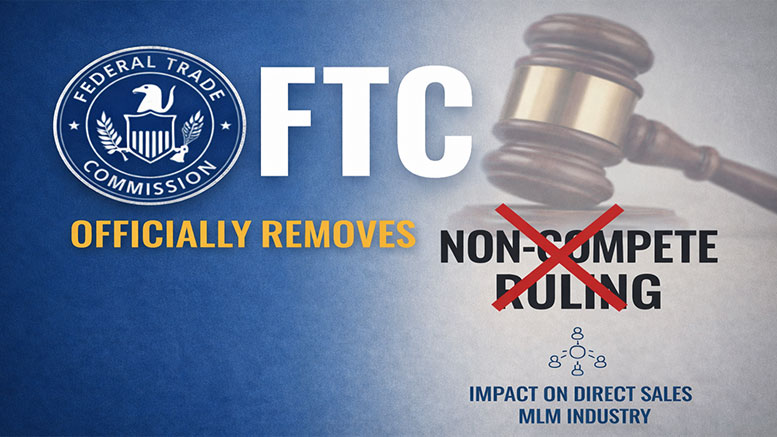
The landscape of American employment law has shifted once again. Following a series of federal court decisions, the Federal Trade Commission (FTC) has officially removed the Non-Compete Clause Rule (16 CFR Part 910) from the Code of Federal Regulations. This move represents the final procedural step in ending the agency’s attempt to enforce a categorical nationwide ban on noncompete agreements.
The Background: From a Blanket Ban to Case-by-Case Enforcement
In April 2024, the FTC initially voted to ban nearly all noncompete agreements, arguing they were an unfair method of competition. However, this rule was met with immediate legal challenges. In August 2024, a U.S. District Court in Texas vacated the rule, calling it “arbitrary and capricious.”
By early 2026, the FTC formally acquiesced to these court rulings. Instead of a universal ban, the Commission has shifted its strategy toward case-by-case enforcement. This means the FTC will now only intervene when it deems a specific agreement to be exceptionally broad or harmful to competition—particularly those involving lower-level workers.
Impact on MLM and Direct Sales: Distributors and Affiliates
For independent contractors, distributors, and affiliates in the MLM and Direct Sales space, the removal of the federal ban brings a return to the status quo, but with a few important nuances:
- In-Term Restrictions Remain Valid: Most direct sales companies have “in-term” non-compete clauses that prevent active distributors from cross-recruiting or selling competing products while they are still under contract. These remain largely enforceable under existing law.
- State Law is King: Without a federal ban, the legality of your agreement depends entirely on the state where you live. For example, states like California, Minnesota, and Oklahoma have near-total bans on noncompetes, while other states like Florida have laws that favor their enforceability.
- Case-by-Case Scrutiny: If a company’s post-termination noncompete is deemed too broad (e.g., preventing you from working in the entire industry for years), the FTC or state courts may still step in to strike it down.
Impact on MLM and Direct Sales Companies
For the companies themselves, this news provides a level of regulatory certainty but requires a more “surgical” approach to legal drafting:
- Move Away from “Blanket” Agreements: Companies are being encouraged to move away from broad, one-size-fits-all noncompete agreements. To be defensible, an agreement should be narrowly tailored to protect specific, legitimate business interests—like proprietary data or trade secrets.
- Focus on Non-Solicitation and NDAs: Rather than a broad noncompete, many companies are finding more success using well-drafted Non-Solicitation and Non-Disclosure Agreements (NDAs). These are generally viewed more favorably by courts as they focus on protecting the company’s network without completely barring a person’s ability to earn a living.
- Compliance with Patchwork Laws: Companies operating in multiple states must ensure their policies are compliant with the varying wage thresholds and notice requirements that differ from one state line to the next.
The Bottom Line
The “nationwide ban” is officially dead, but the scrutiny of noncompete agreements is very much alive. Both distributors and companies should review their current agreements to ensure they are reasonable in scope, duration, and geography.
Stay Informed with More Industry News To stay up to date on the latest legal and industry developments, be sure to check out these resources:
- Direct Selling News: directselling.news
- MLM News: mlm.news
And for deep-dive discussions on these topics, enjoy the latest episodes on:
- Building Fortunes Radio: buildingfortunesradio.com
- Youmongus Radio: youmongusradio.com
Be the first to comment on "FTC Officially Removes Noncompete Rule: What it Means for the Direct Selling Industry"